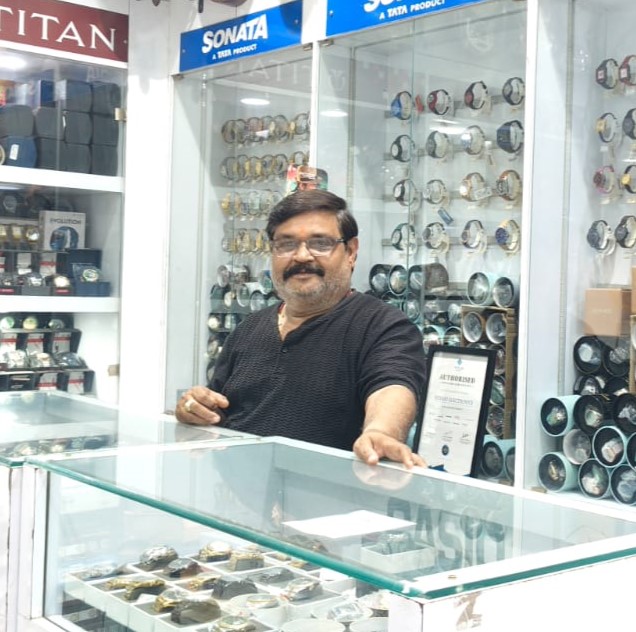
Kanpur puts watches through 45°C summers, road dust and a humid monsoon. Most of the failures we see at the counter come from those three things, not from manufacturing faults.
A few habits will add years to any watch.
Battery: expect two to three years
A standard quartz cell lasts roughly two to three years. Chronographs and backlit digitals drain faster. Replace a dead battery promptly — a leaking cell can damage the movement, which costs far more than the battery.
We replace batteries in store, usually while you wait, and reseal the case gasket where the model requires it.
Understand your water resistance rating
- 30 m / 3 ATM: rain and splashes only.
- 50 m / 5 ATM: handwashing and brief contact with water.
- 100 m / 10 ATM: swimming.
- Never operate the crown or pushers while the watch is wet.
Straps and bracelets
Leather is the first casualty of a Kanpur monsoon — sweat and humidity break down the lining. If you wear leather daily, keep a steel or silicone strap to rotate through the wet months.
Steel bracelets collect dust in the links. A soft brush with mild soapy water every few weeks, dried thoroughly, keeps them looking new.
Storage
Keep unworn watches in their box, away from direct sunlight and away from speakers or magnetic strips. For mechanical pieces, wind and run them briefly every few weeks so the lubricants do not settle.
When to bring it in
- Fogging under the glass — get it opened and dried immediately.
- Seconds hand jumping in multi-second steps — the battery is nearly finished.
- A loose or rattling crown.
- Any mechanical watch running noticeably fast or slow.